
What we do

EANM 2026 brought the international nuclear medicine community together in Vienna, with conversations spanning theranostics and radioligand therapy, PET innovation, new radiopharmaceuticals and AI.
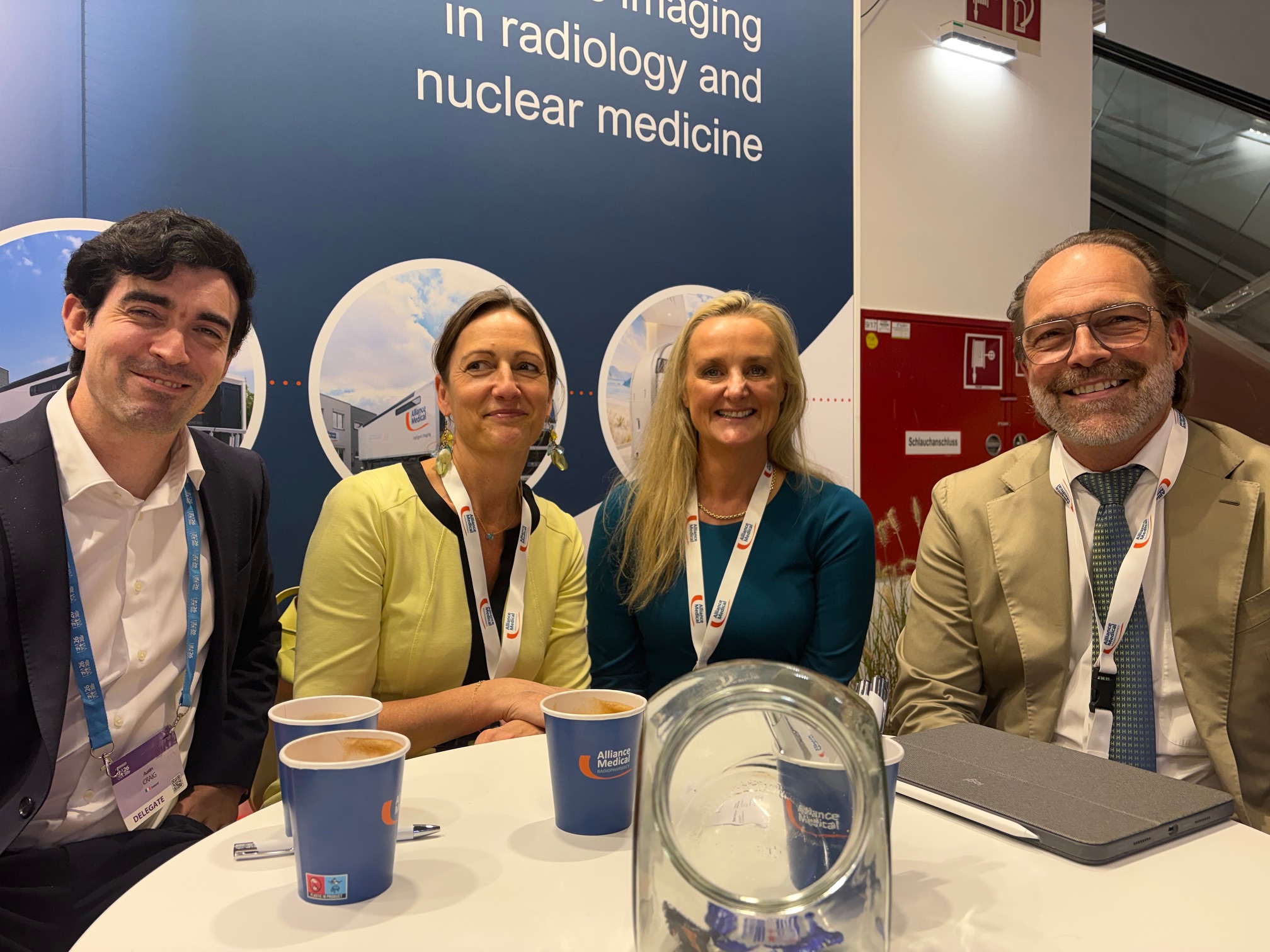
Colleagues from across Alliance Medical Group joined peers and partners from our sector, bringing perspectives from different regions and areas of expertise.
For Axel Schmidt, General Manager of Radiopharmacy for Alliance Medical Group, the direction of travel was clear:
“EANM reinforced how quickly nuclear medicine is evolving, particularly around more targeted diagnostics, radiotherapy and theranostics. For Alliance Medical Group, our experience across radiopharmacy and imaging gives us a strong foundation as diagnosis and treatment become increasingly connected.”
Just as important as exploring developments across the sector was the opportunity to bring our own teams together. As Axel reflected:
“It’s good to see how the Alliance Medical colleagues work together as a group while attending an event like EANM. Having a shared presence brings people together and gives us a better understanding of the expertise different teams bring.”
Conversations crossed imaging, radiopharmacy, technology, service delivery and isotope supply, allowing different specialisms to connect around some of the shared opportunities and challenges facing nuclear medicine.
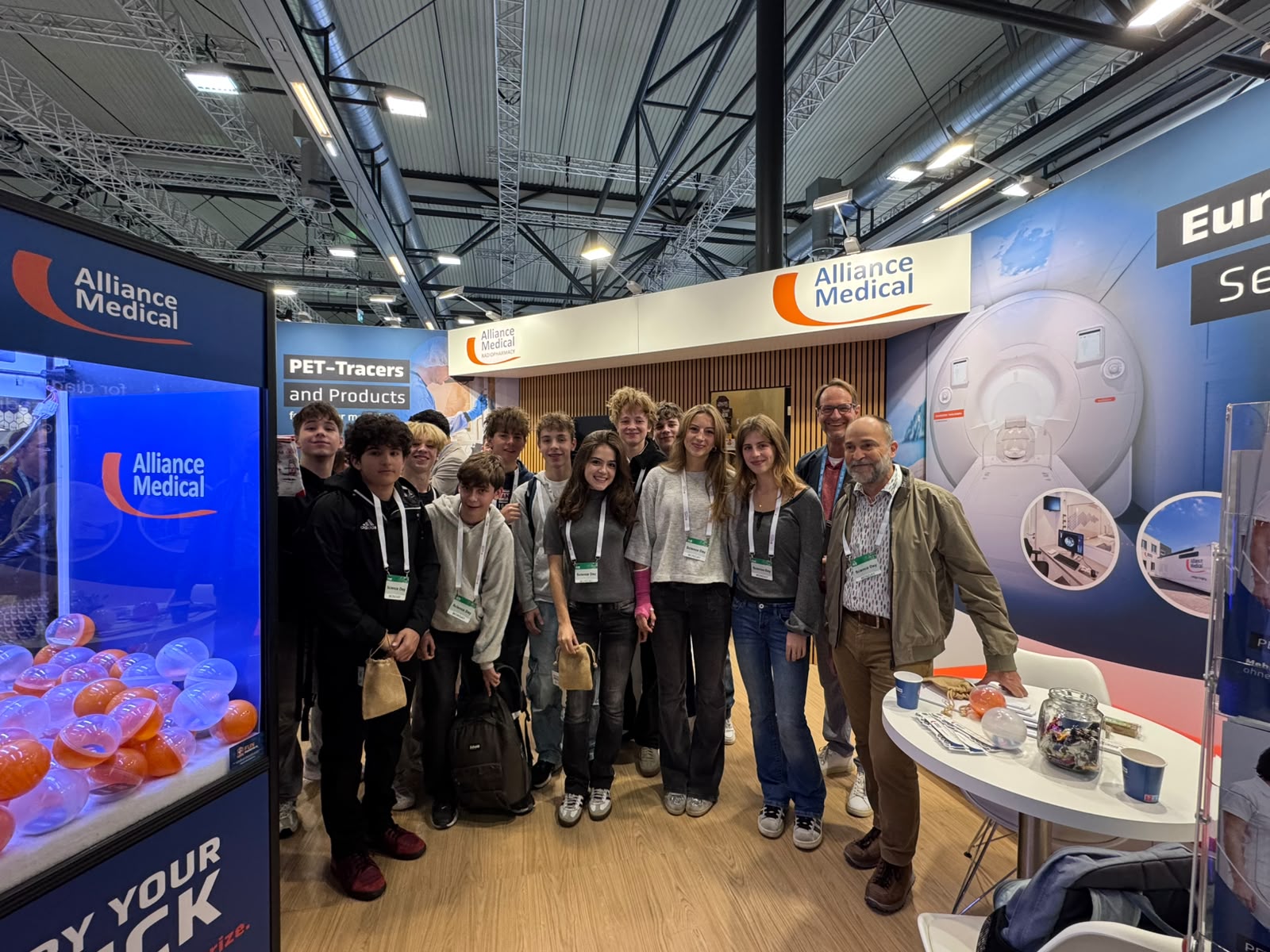
'The Future of Nuclear Medicine' theme wasn't confined to the conference programme. Alliance Medical's on-stand claw machine proved a popular draw, particularly with groups of students and lecturers!
The future of the field isn't only about new technologies, tracers and therapies. It will also rely on the people who take them forward.
For Dr Peter Strouhal, Medical Director at Alliance Medical UK, EANM highlighted just how broad the next wave of change could be.
Theranostics featured strongly, alongside radioligand therapy, an increasingly important form of targeted treatment that uses radioactive compounds to deliver radiation directly to specific cancer cells. Peter also highlighted developments in PSMA PET, cardiac PET, personalised dosimetry and novel radiopharmaceuticals, as well as increasing applications of AI in PET reconstruction, workflow optimisation and clinical decision support.
Importantly, these were not simply scientific discussions. Developments in digital PET and new scanner technology also prompted conversations around future investment, service planning and the technologies healthcare providers will need to consider as the field evolves.
Jane Scannell, Commercial Lead for the Radiopharmaceutical Project at Alliance Medical Ireland, came away with a similar sense of pace:
“The sessions highlighted that we are living in a true era of exponential growth for molecular imaging and theranostics.”
Jane also focused on what happens as innovation moves from research into clinical practice. Her experience included hearing directly from patient advocate Martin Sweeney, whose cancer journey brought a patient perspective to the scientific and technological discussions taking place across the congress.
“At Alliance Medical, we are not just watching this transformation unfold, we are actively preparing for it.”
That preparation matters. New science alone doesn't create new services. It also requires the expertise, infrastructure and investment to translate innovation into clinical practice.
With so many opportunities emerging across nuclear medicine, deciding where to focus is becoming increasingly important.
For Axel Schmidt, the congress provided useful validation of Alliance Medical Group’s existing direction. His reflection was simple:
“It shows me we are on the right way.”
New technologies, tracers and therapies will continue to emerge. The focus for Alliance Medical Group is on where that progress can make a practical difference, supporting better diagnosis, treatment and access to care.




Delivering diagnostics
and insight at scale